Still not very distinctive. Air ducts, lights, large canopy all kind of 60's LeMans inspired.


Still messing with lights, but they take a long time to render and even longer to make realistic.


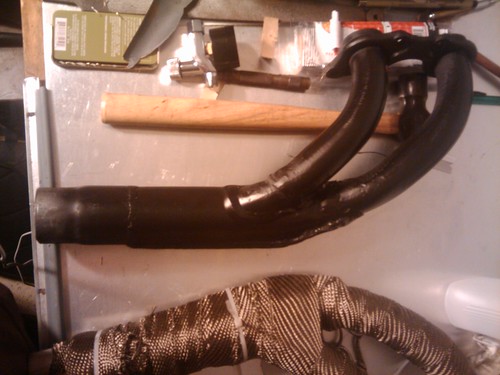 Coming along, coming along.. These are just the headers, and fitting the titanium wrap. I'm not sure exactly what it's made of, but it's "titanium colored" material. I think they are actually fiberglass strands. These headers are made of mild steel. They will oxidize rapidly at high temperatures. So I don't know if wrapping them is a good idea, or just another manufacturer's gimmick which has caught on in performance tuning world. Certainly a refractory material INSIDE the headers sounds like a good idea, as it will protect the surface from the oxidizing atmosphere. I'm reluctant to spray ITC-100 down the header pipes though. I'm not running this in 24 hour endurance races. Yet.
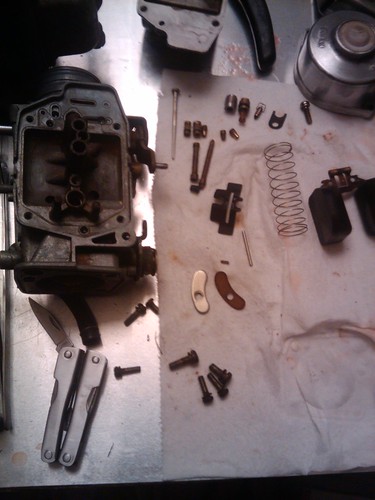
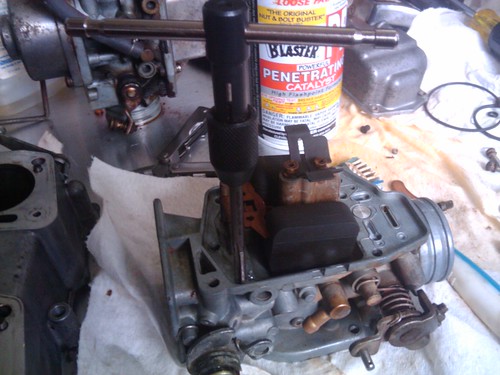
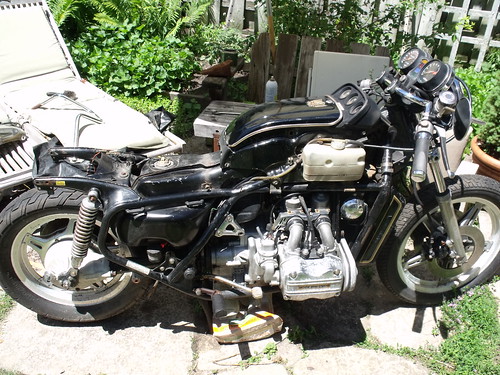 The nice thing about Goldwings is the engine. It's the most complicated engine you could want in a bike, but also probably the most durable and reliable. It's a 1-liter boxer engine, so the cylinder heads stick out either side. As most BMW folks will tell you, that makes it so much easier to to top end work! You can change head gaskets while sitting on the side of the road, etc etc. Well if it were air cooled that might be the case, but as is you'd be spilling coolant all over the highway.. anyhow. The cylinder heads (you get two!) are easily accessible to both the mechanic, the riders knees, and weather.
The last two bits are not so fantastic. The valve covers are naturally covered in chrome, because this is a big fat bike for fatties who like to have everything electroplated in nickel and chromium to give it that cheap, polished look. Because the real polished look takes time and work, rather than time and chemicals. Anyhow, due to the reactivity of aluminium alloys in relation to PH and the presence of other alloys, the nickel/chromium coating bubbles and peels and reveals the white hydroxide corrosion underneath.
Hydroxide corrosion itself is not so difficult to remove and prevent. But in the presence of electroplated nickel + chrome, or copper + chrome, it is a complete pain in the ass.
If you want to avoid wasting hours of your time, but want to restore the aluminum parts to some degree, pay someone else to do it. Otherwise you may peel, sand, brush, or try anything to remove both the old nickel/chrome and the hydroxide corrosion without making the old valve covers into a complete mess.
If you do get them polished up to a nice brushed aluminum finish, either stop there or have them powder coated. Do not try to paint them. This will end in tears. Paints of any kind are not durable enough for the kinds of things valve covers go through.
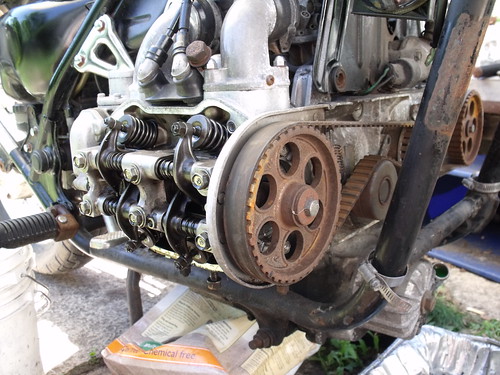
So, first things first, if the engine don't work right, whats the point? GL engines are interference type with belt driving timing gear. The belts on this bike had seen 54,000+ miles, which is probably 30,000 too many. Anyhow, belts are cheap and easy to change, so rather than risk complete engine disaster, I replace the belts.
The nice thing about Goldwings is the engine. It's the most complicated engine you could want in a bike, but also probably the most durable and reliable. It's a 1-liter boxer engine, so the cylinder heads stick out either side. As most BMW folks will tell you, that makes it so much easier to to top end work! You can change head gaskets while sitting on the side of the road, etc etc. Well if it were air cooled that might be the case, but as is you'd be spilling coolant all over the highway.. anyhow. The cylinder heads (you get two!) are easily accessible to both the mechanic, the riders knees, and weather.
The last two bits are not so fantastic. The valve covers are naturally covered in chrome, because this is a big fat bike for fatties who like to have everything electroplated in nickel and chromium to give it that cheap, polished look. Because the real polished look takes time and work, rather than time and chemicals. Anyhow, due to the reactivity of aluminium alloys in relation to PH and the presence of other alloys, the nickel/chromium coating bubbles and peels and reveals the white hydroxide corrosion underneath.
Hydroxide corrosion itself is not so difficult to remove and prevent. But in the presence of electroplated nickel + chrome, or copper + chrome, it is a complete pain in the ass.
If you want to avoid wasting hours of your time, but want to restore the aluminum parts to some degree, pay someone else to do it. Otherwise you may peel, sand, brush, or try anything to remove both the old nickel/chrome and the hydroxide corrosion without making the old valve covers into a complete mess.
If you do get them polished up to a nice brushed aluminum finish, either stop there or have them powder coated. Do not try to paint them. This will end in tears. Paints of any kind are not durable enough for the kinds of things valve covers go through.
So, first things first, if the engine don't work right, whats the point? GL engines are interference type with belt driving timing gear. The belts on this bike had seen 54,000+ miles, which is probably 30,000 too many. Anyhow, belts are cheap and easy to change, so rather than risk complete engine disaster, I replace the belts.
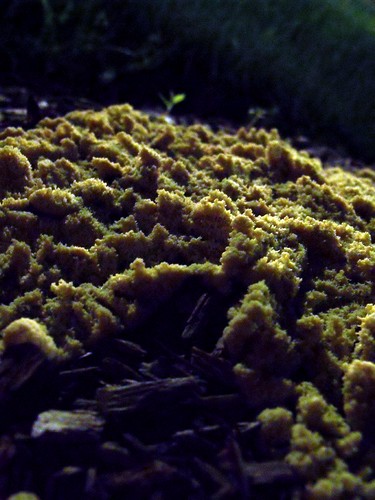 Slime mold Physarum polycephalum found in the yard. It appeared soon after the sun went down. This is a fascinating creature, exhibiting extraordinary intelligence for a single celled creature. It is capable of navigating mazes to locate food sources, taking the shortest path first. It can recognize patterns of events over long periods of time. It's been a hot item for your bio-computing scientists. http://www.es.hokudai.ac.jp/labo/cell/accomplishment_e.html


